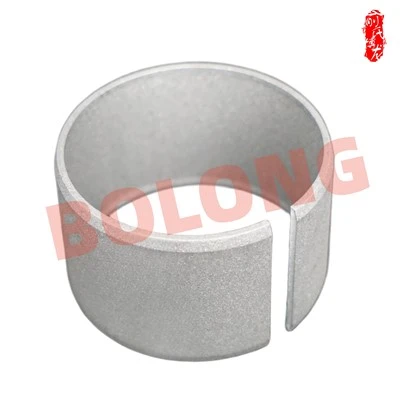
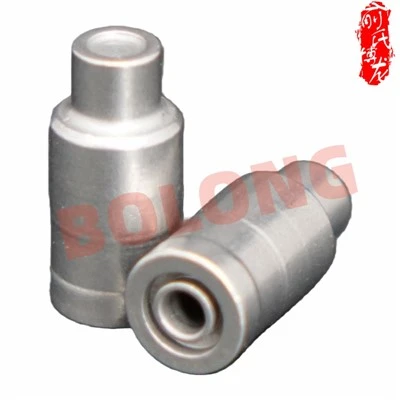
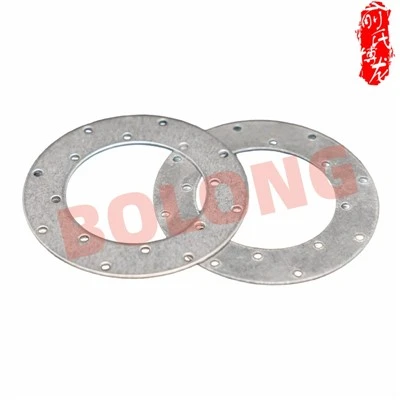
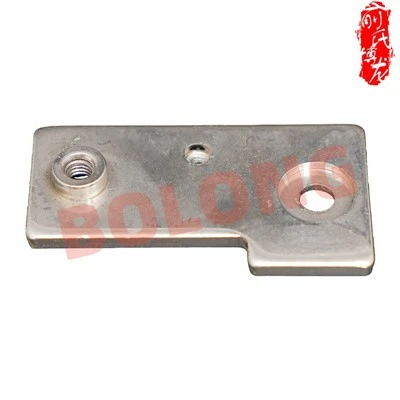
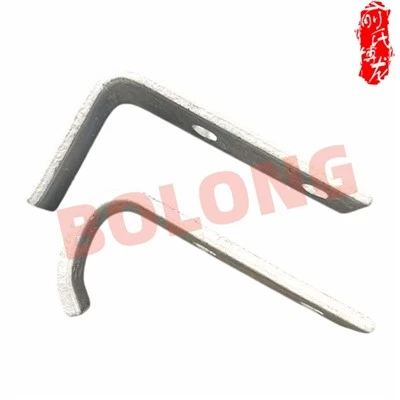
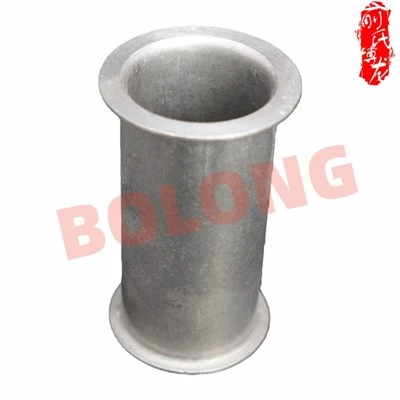
Ningbo Fenghua Bolong Machinery Manufacturing Co., Ltd. is one of the leading manufacturers and suppliers of hot forging in China. Please feel free to buy durable hot forging made in China here from our factory. All customized products are with high quality and competitive price.
Forming Capabilities
|
Material Category |
Typical Alloys |
Component Examples |
As-Forged Characteristics |
|
Carbon Structural Steels |
20#, 35#, 45#, 50Mn, 65Mn |
Brake system parts, structural components, drivetrain parts |
Refined grain structure, high toughness, good fatigue resistance |
|
Alloy Structural Steels |
40Cr, 42CrMo, 20CrMnTi, 35CrMo |
Gear blanks, connecting rods, steering knuckles, high-stress components |
High strength-to-weight ratio, wear resistance, heat-treatable |
|
Brass |
H62, H65 |
Precision fittings, valve components, electrical parts |
Good corrosion resistance, consistent finish, machinable |
Process Specifications
|
Parameter |
Value |
|
Equipment |
High-capacity hot forging presses with induction billet heaters |
|
Heating Method |
Induction heating for precise temperature control and scale reduction |
|
Process Temperature |
1,000°C – 1,200°C (steel); 700°C – 850°C (brass) |
|
Typical Press Load |
10 – 50 MN (depending on component size and material) |
|
Dimensional Accuracy |
±0.1mm as-forged |
|
Secondary Operations |
CNC finishing, heat treatment, surface treatment |
|
Certifications |
IATF 16949, ISO 14001, ISO 45001, IECQ QC080000 |
Performance Highlights
Dynamic recrystallization – grain refinement in-process
At forging temperatures, new grains nucleate and grow during deformation, replacing the original coarse structure. The result: fine, equiaxed grains throughout the part - not just on the surface. This delivers higher yield strength, better toughness, and superior fatigue resistance than cast or machined parts.
01
Continuous grain flow – no cut fibers
The deformation process aligns grain structure along the part contour. Unlike machining - which cuts through grain boundaries - hot forging preserves continuous flow lines. Components are stronger along load paths and more resistant to crack initiation.
02
Closed die forging for near-net shape
Our closed die (impression die) operation produces detailed geometries with ±0.1mm accuracy as-forged. Minimal post-machining required. Material waste is limited to flash - not the substantial chips generated by machining from solid bar.
03
Multi-material capability
We process carbon structural steels, alloy structural steels, and brass - offering customers a broad material selection under one roof, with tailored heating and forming parameters for each alloy.
04
IATF 16949-certified facility
Full PPAP Level 3 documentation available - process FMEA, control plans, capability studies - prepared to the same standard we apply to Tier 1 automotive customers.
05
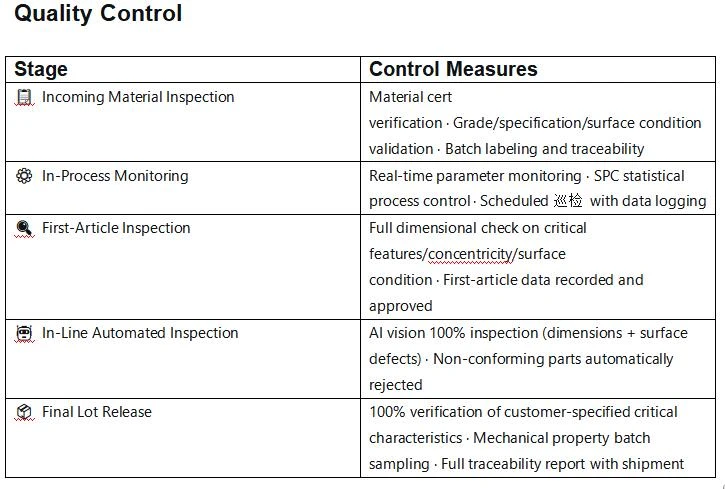
Quality Control
Applications
Automotive Brake System Components
Brake plates, brake carriers, and brake cylinders are hot forged from carbon and alloy steels to withstand repeated thermal cycling and high mechanical loads. The continuous grain flow and refined microstructure deliver the combination of strength, ductility, and thermal stability required for safe, long-lasting braking performance.
Drivetrain and Transmission Components
Flange yokes, driving shafts, universal joints, joint discs, and gear blanks are hot forged to transmit power efficiently from engine to wheels. Hot forging produces the torsional strength and fatigue life that cast or machined alternatives cannot match.
Chassis and Structural Components
Steering knuckles, connecting rods, and suspension components are produced through closed die forging, achieving the strength-to-weight ratio and dimensional consistency required for high-volume automotive assembly.
Industrial Equipment and Machinery
Valve components, pump housings, and heavy machinery structural parts - hot forged from carbon and alloy steels for wear resistance and durability in demanding operating environments.
Beyond Automotive
|
Sector |
Typical Components |
Key Requirements |
|
Heavy Earth Moving Equipment |
Track components, structural links, pivot pins |
Impact resistance, wear resistance, large part capability |
|
Oil & Gas |
Valve bodies, flanges, pipeline fittings |
Pressure integrity, corrosion resistance, material traceability |
|
Power Generation |
Turbine components, generator parts |
High-temperature strength, fatigue resistance |
|
Agricultural Equipment |
Chassis components, drivetrain parts |
Durability, cost-effective volume, weather resistance |
|
General Industrial |
Custom forgings per drawing/specification |
Design flexibility, material range, batch traceability |
Why Hot Forging
The metallurgical difference between hot forging and other manufacturing methods is not subtle:
Cast parts – molten metal solidifies with a random, dendritic grain structure. Porosity and inclusions are inevitable. Strength is inconsistent.
Machined parts – material is removed from solid bar. Grain boundaries are cut through. The continuous structure of the original bar is broken. Strength in the load-bearing direction is compromised.
Hot forged parts – deformation and recrystallization occur simultaneously at high temperature. The original cast structure is replaced with fine, uniform grains. Grain flow follows the part contour. Density reaches theoretical maximum - no porosity. Strength is higher in every direction.
For brake system components under cyclic thermal loading, drivetrain parts under torsional stress, and structural parts under impact loads, hot forging is not an alternative. It is the specification.
Contact Us for Your New Project
Hot Tags: hot forging, China hot forging manufacturers, suppliers, factory, Deep Drawing, Laser Cutting, Precision Laser Cutting, process, Progressive Die Stamping, Smooth Edge Fine Blanking