
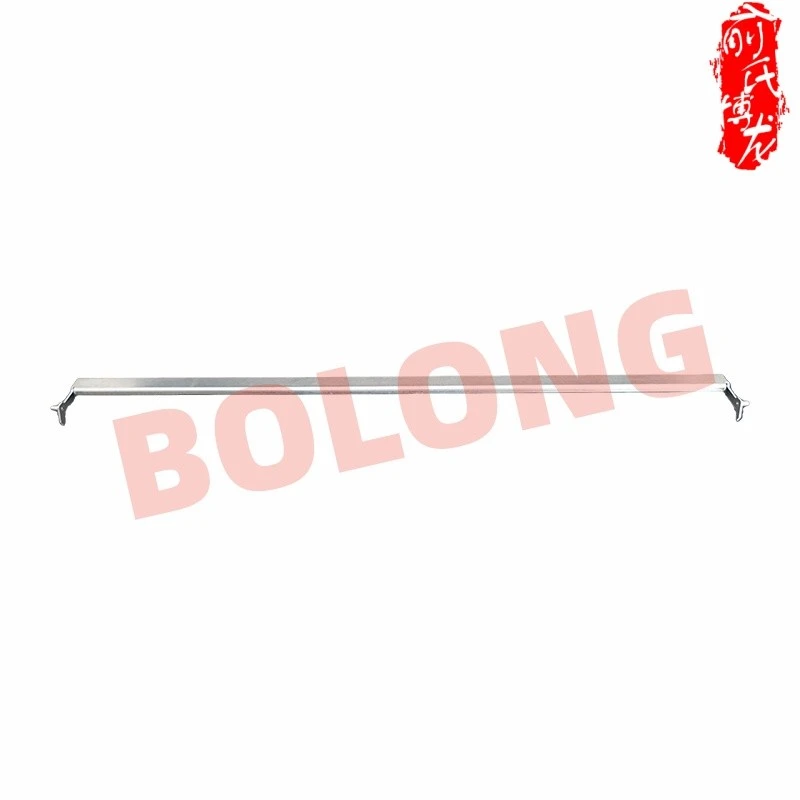
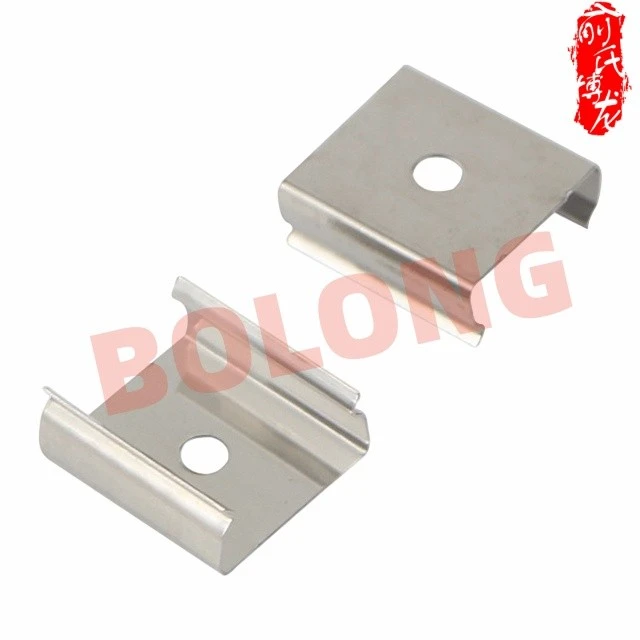
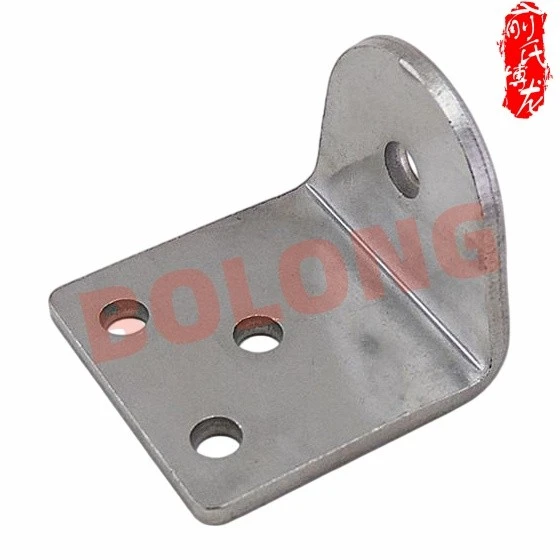
Ningbo Fenghua Bolong Machinery Manufacturing Co., Ltd. is one of the leading manufacturers and suppliers of bending and forming in China. Please feel free to buy durable bending and forming made in China here from our factory. All customized products are with high quality and competitive price.
Forming Capabilities
|
Material Types |
Component Types |
Key Features |
|
Cold-rolled steel: SPCC, DC01, ST12, Q195 |
Brackets, enclosures, chassis components |
Clean surfaces, precise angles, consistent springback compensation |
|
Hot-rolled steel: SPHC, Q235 |
Structural brackets, heavy-duty frames, equipment supports |
High strength, good formability, cost-effective for thicker gauges |
|
Galvanized steel: SECC, SGCC |
Corrosion-resistant brackets, outdoor equipment parts |
Good formability, surface protection, weldable |
|
Carbon steel: 20#, 45# |
Structural components requiring higher strength |
Increased load capacity, heat-treatable options |
|
Deep drawing steel: DC04, SPCE |
Components with complex curvature, drawn forms |
Excellent ductility, consistent thickness distribution |
|
Stainless steel: 304, 316L |
Brackets, structural parts, corrosion-resistant components |
High strength, corrosion resistance, springback management required |
|
Pure aluminum: 1060, 1100, 1050 |
Lightweight enclosures, conductive components |
Excellent formability, lightweight, conductive |
|
Aluminum alloy: 3003, 3005, 5052, 5754, 6061, 6082, 6063 |
Structural brackets, automotive parts, equipment housings |
Good strength-to-weight ratio, corrosion resistance |
|
Pure copper: T1, T2, TU2 |
Busbar supports, conductive brackets |
High conductivity, good formability |
|
Brass: H62, H65, H68 |
Decorative and structural parts, electrical contacts |
Good formability, corrosion resistance, aesthetic finish |
|
Thickness Range: 0.3mm – 12mm |
V-bending, U-bending, Z-bending, hemming, curling, offset bending |
Angular tolerance ±0.5°, consistent springback compensation, minimal distortion |
Process Specifications
|
Parameter |
Value |
|
Equipment |
Hydraulic and CNC press brakes |
|
Material Thickness Range |
0.3mm – 12mm |
|
Part Length Range |
5mm – 400mm |
|
Part Width Range |
5mm – 250mm |
|
Bending Angle Range |
0° – 180° |
|
Angular Tolerance |
±0.5° |
|
Secondary Operations |
Welding, tapping, countersinking, surface treatment |
|
Certifications |
IATF 16949, ISO 14001, ISO 45001, IECQ QC080000 |
Performance Highlights
Precision angle control with springback compensation – Material elastic recovery after bending is a fundamental challenge in sheet metal forming. We apply calculated over-bending and process adjustments to compensate for springback, achieving angular tolerances within ±0.5° across all material types and gauges.
Broad material and gauge capability – From 0.3mm aluminum enclosures to 12mm steel structural brackets, our press brakes handle a wide range of material thicknesses and strength levels. Stainless steel, galvanized, and high-strength materials are processed with specific tooling and parameter control to ensure consistent bend quality.
Flexible batch sizes – prototypes to high-volume production – Tooling changes are fast, programming is flexible, and setups are efficient. Bending and forming supports everything from single-piece prototypes and engineering samples to full production runs - ideal for projects that require design iteration before volume commitment.
Complex profiles with minimal tooling investment – Unlike stamping - which requires dedicated, high-cost dies for each unique profile - bending operations use universal tooling with adjustable backgauges and programmable ram positions. Complex channel, Z-bend, and offset profiles are achieved with minimal tooling investment and shorter lead times.
In-process angle verification – Bend angles are verified during production using mechanical protractors, angle gauges, and coordinate measuring equipment. Adjustments are made on the fly to compensate for material variation - ensuring consistent geometry across the entire batch.
Integrated fabrication capabilities – Bending operates alongside our stamping, fine blanking, and welding operations. Structural brackets, enclosures, and assemblies move from sheet stock to welded and finished part without leaving the facility - reducing logistics and simplifying supplier management.
IATF 16949-certified facility – Full PPAP Level 3 documentation available - process FMEA, control plans, capability studies - prepared to the same standard we apply to Tier 1 automotive customers.
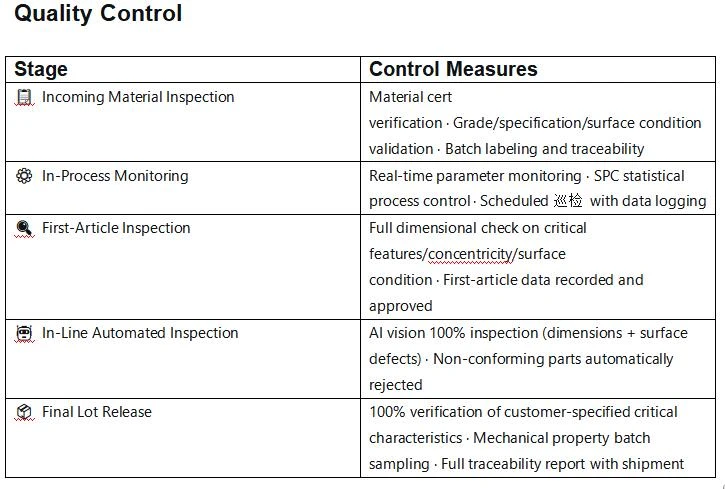
Quality Control
Applications
Structural Brackets and Mounts
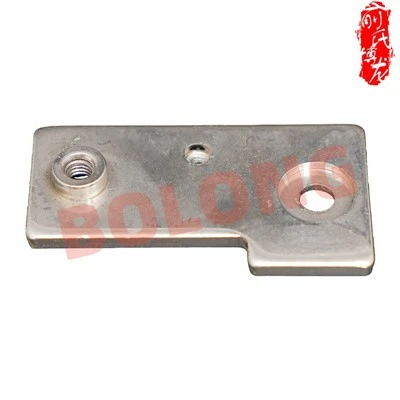
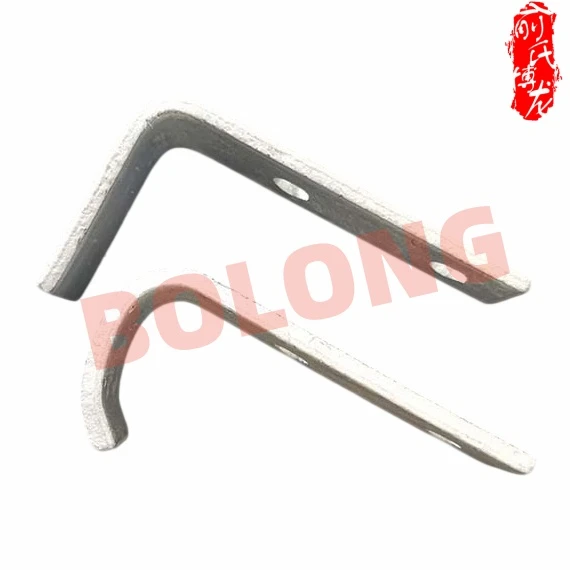
Equipment frames, support brackets, and mounting plates are bent from steel and aluminum to precise angles. Applications include automotive chassis brackets, industrial machinery supports, and electronics enclosures - components that require consistent geometry and reliable load-bearing capacity.
01
Enclosures and Chassis Components
Electronic enclosures, control panels, and equipment housings are formed from cold-rolled steel, stainless steel, and aluminum with tight angle control and clean finishes. The bending process delivers consistent part geometry suitable for automated assembly lines and tight-fitting panel assemblies.
02
Automotive Components
Seat brackets, structural supports, and underbody components are bent from high-strength steel and aluminum alloys, achieving the dimensional consistency required for safety-critical body-in-white and interior assemblies. Zinc-coated galvanized steels are selected where corrosion resistance is required.
03
HVAC and Equipment Parts
Ductwork, equipment panels, and air-handling components are bent from galvanized and stainless steel, with consistent flanges and seam geometries for leak-tight assembly. The process supports both prototype and high-volume production runs with the same level of precision.
04
Busbar Supports and Conductive Components
Pure copper and aluminum conductive brackets and busbar supports are bent with consistent angles and clean edges - critical for consistent electrical contact pressure and thermal performance. Burr-free break edges help maintain insulation clearance requirements.
05
Beyond Automotive
|
Sector |
Typical Components |
Key Requirements |
|
Electronics / Enclosures |
Chassis, enclosures, mounting brackets, control panels |
Consistent angles, flatness, clean surfaces for automated assembly |
|
Industrial Equipment |
Machine guards, equipment frames, support brackets |
Strength, durability, weld preparation for subsequent assembly |
|
Telecommunications |
Rack equipment brackets, chassis components, mounting plates |
Precision angles, consistent geometry for equipment alignment |
|
Construction / Architectural |
Building hardware, structural brackets, railings |
Strength, corrosion resistance, aesthetic finish |
|
Energy / Renewable |
Solar panel mounting frames, support brackets, cable trays |
Weather resistance, structural strength, volume output |
Why Bending and Forming
Stamping delivers high-volume precision parts but requires significant upfront tooling investment - and changes to geometry require new dies. Machining produces brackets from solid stock but wastes material and is slow. Bending and forming occupies the productive middle ground:
Stamping – high-speed, high-volume, but high die cost and limited design flexibility. Changes require new tooling.
Machining – precise but slow and wasteful. Steel chips represent material you've paid for but can't use.
Bending and forming – tooling is universal and configurable. Geometry changes are made on the control screen, not in the tool room. Material yield is high - no chips, just formed profiles. From prototypes to full production, the same press brake, the same tooling, the same ±0.5° accuracy.
For structural brackets, equipment enclosures, and industrial profiles - where strength, precision, and cost-efficiency all matter - bending and forming is the method.
Contact Us for Your New Project
Hot Tags: bending and forming, China bending and forming manufacturers, suppliers, factory, Cold Extruded Valve Bodies, Deep Drawing, Laser Cutting, Multi Station Cold Heading, Precision Cold Extrusion, process