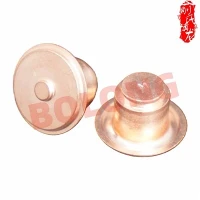
The advantages of a vertical machining center are planar machining and vertical hole/contour machining. It is suitable for small to medium-sized, complex parts. Typical applications include:
Plate-shaped parts: These are the most common type of parts milled by vertical machining centers. They mainly include various panels, cover plates, templates, etc. They are characterized by clear planar contours and include structures such as planes, grooves, and hole systems. They are suitable for three-axis vertical machining centers to complete multiple machining operations such as milling, drilling, and tapping in a single setup.
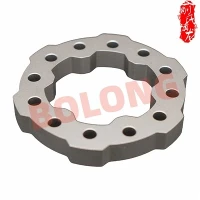
Disc-shaped parts: These mainly consist of rotating disc-shaped parts such as flanges, end covers, and pulleys. They typically require machining of end faces, keyways, outer contours, and distributed holes. Vertical machining centers with vertically arranged spindles provide stable clamping and can efficiently complete batch processing.
Parts:
Box-type parts: such as motor housings, gearbox housings (requiring milling of planes and drilling of multiple positioning holes);
Disc-type parts: such as flanges, gear end caps (requiring milling of end faces, turning of steps, and drilling of bolt holes);
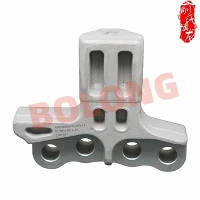
Structural parts: such as light alloy brackets in the aerospace industry, steering knuckles in the automotive industry (requiring multi-face milling and high-precision holes);
Mold-type parts: such as the cavities of plastic molds, the cutting edges of stamping dies (requiring curved surface milling and high surface finish).